# Why 8 Hours of Sleep Isn’t Enough
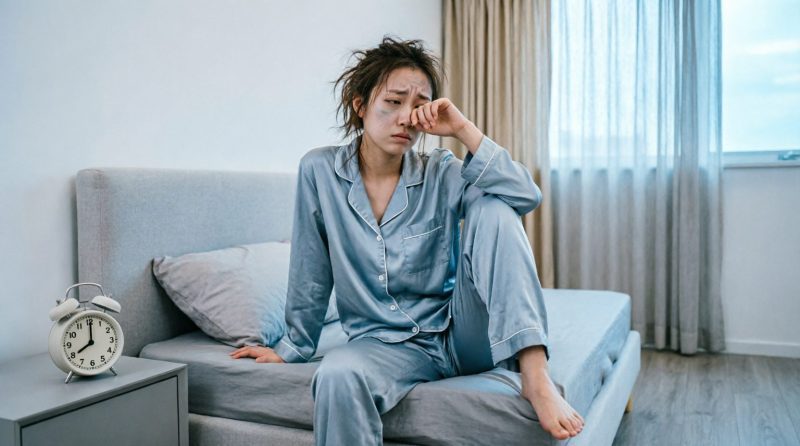
You set your alarm for exactly eight hours after you close your eyes. You do the math. You hit your target. You pat yourself on the back… and then you wake up feeling like you’ve been hit by a slow-moving truck.
Sound familiar?
We’ve been sold the idea that eight hours is the golden ticket to rest, recovery, and next-day brilliance. But if you’ve ever clocked a full eight and still found yourself chugging coffee by 10 AM, zoning out in meetings, or snapping at your favorite people for no reason—you’re not broken. You’ve just been working with an incomplete rulebook.
Here’s the truth: **eight hours is an average, not a guarantee.** And if you’re only counting hours while ignoring what’s actually happening inside your brain and body, you’re missing half the picture.
—
## The Great “8-Hour Rule” Myth
Let’s rewind a bit. Where did this magic number even come from? It wasn’t handed down by sleep scientists. It’s mostly a historical average that got simplified over time. The National Sleep Foundation actually recommends **7–9 hours** for most adults, and even that range is a starting point, not a finish line.
Sleep needs are deeply personal. Some people genuinely thrive on 7. Others need a solid 9 just to function. Genetics, age, activity level, stress, illness, and even your circadian rhythm type (yes, “night owl” vs. “early bird” is real) all shift the goalposts.
But here’s the kicker: **how long you sleep matters less than how well you sleep.**
—
## Sleep Quality > Sleep Quantity
Your brain doesn’t just “turn off” at night. It runs a highly organized shift schedule called **sleep architecture**. Each night, you cycle through four stages:
– Light sleep (the gateway)
– Deep sleep (where physical repair, immune support, and hormone balance happen)
– REM sleep (where memory consolidation, emotional processing, and creativity kick in)
You typically need 4–5 full cycles per night to wake up feeling restored. But if you’re tossing and turning, waking up frequently, drinking alcohol right before bed, scrolling in the dark, or going to bed at wildly different times—you might be getting eight hours of *presence* in bed, but only four or five hours of *actual restorative sleep*.
Quality isn’t about perfection. It’s about continuity, timing, and giving your nervous system the chance to actually downshift.
—
## Why You Might Still Be Exhausted After 8 Hours
If you’re hitting the number but still dragging, check these silent sleep saboteurs:
🔹 **Inconsistent sleep/wake times** – Your body runs on rhythms, not spreadsheets. Shifting your bedtime by an hour or two each night is like giving yourself mini-jet lag every week.
🔹 **Late caffeine or alcohol** – Coffee has a half-life of 5–6 hours. That 4 PM espresso is still whispering in your brain at midnight. Alcohol might knock you out faster, but it shreds REM sleep and causes fragmented awakenings.
🔹 **Blue light & mental overstimulation** – Screens, stressful emails, or doomscrolling right before bed tell your brain it’s still daytime. Cortisol stays up. Melatonin stays down. Sleep stays shallow.
🔹 **Poor sleep environment** – Too warm, too bright, too noisy, or a mattress that fights you back. Your bedroom should feel like a cave, not a studio apartment.
🔹 **Undiagnosed sleep issues** – Things like sleep apnea, restless leg syndrome, or chronic stress can make eight hours feel like two. If you snore loudly, gasp at night, or wake up with headaches, it’s worth chatting with a professional.
—
## How to Actually Get Restorative Sleep (Without Obsessing Over the Clock)
You don’t need a sleep tracker to know if you’re rested. You need a few intentional habits that work *with* your biology, not against it.
✅ **Pick a wake time and protect it.** Consistency in the morning anchors your circadian rhythm better than anything else. Even on weekends. (Yes, really.)
✅ **Build a 60-minute wind-down.** Dim the lights. Step away from work. Swap scrolling for a book, stretching, tea, or quiet conversation. Signal to your brain: *We’re shifting gears.*
✅ **Cool, dark, quiet.** Aim for 60–67°F (15–19°C). Blackout curtains or a sleep mask. Earplugs or white noise if needed. Your body drops core temperature to initiate deep sleep—help it out.
✅ **Time your fuel.** Finish heavy meals 2–3 hours before bed. Keep caffeine before 2 PM. If you drink, stop at least 3 hours before sleep. Hydrate earlier in the day so you’re not doing midnight bathroom laps.
✅ **Move your body (but not right before bed).** Daily movement improves sleep depth. Just avoid intense workouts within 2 hours of bedtime unless you know your body handles it well.
✅ **Stop tracking, start feeling.** If you’re waking up naturally, thinking clearly, and maintaining steady energy through the day—you’re doing fine. Ditch the guilt over “failing” eight hours.
—
## The Real Goal Isn’t a Number—It’s How You Feel
Sleep isn’t a performance metric. It’s a daily reset button for your brain, your hormones, your immune system, and your mood. Chasing eight hours while ignoring quality is like counting calories but never checking what’s actually on the plate.
Instead of asking, *“Did I get eight hours?”* try asking:
– Did I wake up feeling reasonably refreshed?
– Did I maintain steady energy through the day?
– Am I relying on caffeine just to function?
– Do I feel emotionally regulated and mentally clear?
If the answer leans toward “no,” don’t punish yourself with stricter rules. Experiment. Adjust. Listen. Sleep is deeply personal, and your best routine won’t look like your coworker’s, your partner’s, or some influencer’s perfectly curated morning ritual.
Give yourself grace. Tweak one habit at a time. And remember: rest isn’t something you earn. It’s something your body deserves, whether you hit 7, 8, or 9.
Sweet dreams,
[Your Name/Blog Name]
*P.S. If you’ve tried optimizing your routine and still feel chronically exhausted, please talk to a healthcare provider. Sometimes fatigue is just fatigue. Sometimes it’s a sign your body needs a little extra support. Both are okay.*